School allergy rules
Nut-Free School Lunch Ideas and Label-Reading Tips
If your school asks you to avoid peanuts or tree nuts, start with a familiar lunch that doesn't need them: a cheese quesadilla, turkey roll-ups, or a mini bagel with cream cheese. Then check the actual ingredients, labels, and school policy. A lunch idea's name cannot tell you whether every product in it is suitable.
You don't need a completely new menu. You do need a clear answer about what your school means by “nut-free.”
This guide is for packing within school restrictions. If your own child has a food allergy, follow their clinician's advice and school allergy plan. No example below is a guarantee against an allergic reaction.
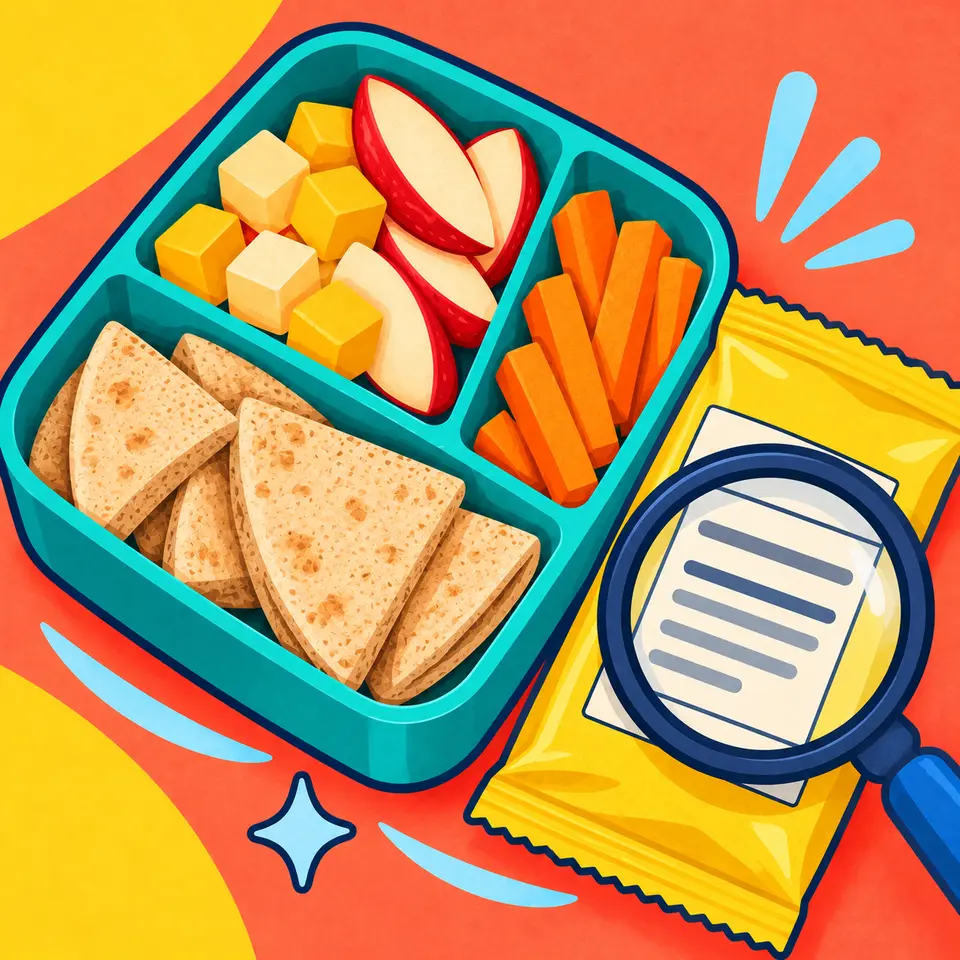
Start with the written school policy
Check whether the restriction covers peanuts, tree nuts, or both, which locations it applies to, and what it says about advisory labels and substitutes. Ask the school about anything unclear rather than relying on another family's interpretation.
Peanut-free and tree-nut-free are not interchangeable descriptions. FDA lists peanuts and tree nuts separately among the major food allergens. FDA allergen guidance
Also ask about any additional classroom requirements. A lunch without nuts can still contain milk, egg, wheat, soy, sesame, or other ingredients a particular child must avoid.
Eight ideas to build from
Every option here depends on the products and preparation you choose. Check all parts of the lunch, including breads, crackers, dressings, sides, and drinks.
Scroll sideways to read the table.
| Lunch starting point | The useful label check |
|---|---|
| Turkey-and-cheese roll-ups with crackers and prepared fruit | Check the meat, cheese, and cracker labels; don't assume deli-counter information matches a packaged product. |
| Hummus with pita and cucumber | Hummus often contains tahini, made from sesame. Check the recipe and any additional school restrictions. |
| Cheese quesadilla with apple slices | Check tortillas, cheese, salsa, and any packaged sides. |
| Pasta salad with chicken or cheese | Check the dressing or pesto rather than assuming a green sauce is nut-free. |
| Hard-boiled egg with bread or crackers and berries | Egg is itself a major allergen; this is only an option when permitted and suitable. |
| Sunflower-seed-butter-and-jelly sandwich | Confirm both the school's substitute policy and the product's allergen information. |
| Yogurt with cereal or granola kept separate | Granola recipes vary widely. Use a product that meets the actual restrictions, not just a familiar brand name. |
| Mini bagel with cream cheese and clementine | Check bakery ingredients and cross-contact information as well as the spread. |
Each idea can be made without peanut or tree-nut ingredients once the products you choose check out. For more main ideas, see school lunches without sandwiches.
For children under 4, and older children who still need it, chop round, firm foods such as grapes into tiny pieces, no larger than half an inch. AAP choking-prevention guidance
Read the whole label, not only “Contains”
For most FDA-regulated packaged foods in the U.S., major allergens used as ingredients must be identified in the ingredient information or a nearby “Contains” statement. A product can contain an allergen without having a separate “Contains” line. Read the ingredients either way. FDA's label-reading guide
Recheck every purchase, even when you bought the same product last week. Recipes can change. A front-of-package claim or a picture of fruit does not replace the ingredient information.
Unpackaged bakery or deli foods may not provide the same label format. Ask for the information you need; when it remains unclear, choose something you can verify with the school and, where relevant, your child's clinician.
“May contain” is a different message
Statements such as “may contain peanuts” or “made in a facility that also processes tree nuts” describe possible unintended presence, rather than the intended recipe. These advisory statements are voluntary. Their absence does not prove that cross-contact cannot occur. FDA explains the distinction.
Follow the school's policy about these labels. For a child with a diagnosed allergy, use the individual allergy plan and contact the manufacturer when information is insufficient. Don't rank different advisory phrases yourself as a promise of greater safety.
Check seed butters before swapping
A sunflower-seed butter may be an option, but “seed butter” isn't an automatic approval. Read the label, check relevant manufacturer information, and ask whether the school permits the substitute. Ask whether it needs to be identified for staff rather than assuming every school follows the same rule.
Keep a shortlist of suitable products to make shopping easier. Still read each label when you buy it.
Keep packing surfaces and utensils separate
Wash hands with soap and water. Use thoroughly cleaned or designated utensils, boards, and containers, and keep the restricted lunch separate while preparing it. Wiping peanut butter off a knife is not the same as cleaning away the allergen. FARE's cross-contact guidance
Follow the school's rules about sharing food. Pack perishable choices with appropriate cold sources; our cold-lunch guide covers temperature control, which is a different task from allergen checking.
Keep planning separate from the label check
Lunch Crew lets parents decide which foods are available for children to choose. Use that menu to reflect your family's decisions, then keep checking the actual products and school requirements. A food name, icon, or app setting cannot verify the package in your kitchen.
Sources and review notes
Prepared by Lunch Crew. Source review: October 27, 2026. General packing guidance, not a food-allergy treatment plan or a certification of any product.