How to Pack Lunch and Two Snacks for a Long School Day
Get the snacks and lunch together first, then decide where everything goes. One labeled pack for lunch, one for classroom snack and one for aftercare. Keep foods that need refrigeration in an insulated lunch bag with proper cold storage. Snacks labeled shelf-stable can go separately in the backpack (if school rules allow) instead of competing for space in the lunchbox.
You may not need a bigger lunch bag. You may just need the crackers to stop taking up the cold space.
Start with the actual school day
Before choosing containers, check the details with school and aftercare:
- When are the snack and lunch breaks?
- Does classroom snack need to arrive separately from lunch?
- Are there ingredient restrictions or packaging rules?
- Is a refrigerator available, and will the aftercare snack actually be stored there?
- Where should each pack go when your child arrives?
Use that routine as your packing map. The example below has a classroom snack, lunch and an aftercare snack; change the labels and order to fit your child's day.
A simple three-pack example
These are suggested combinations, not set portions or foods every child needs to eat. Choose familiar foods, check the actual product labels and school rules, and pack amounts that suit your child.
Classroom snack: easy to find
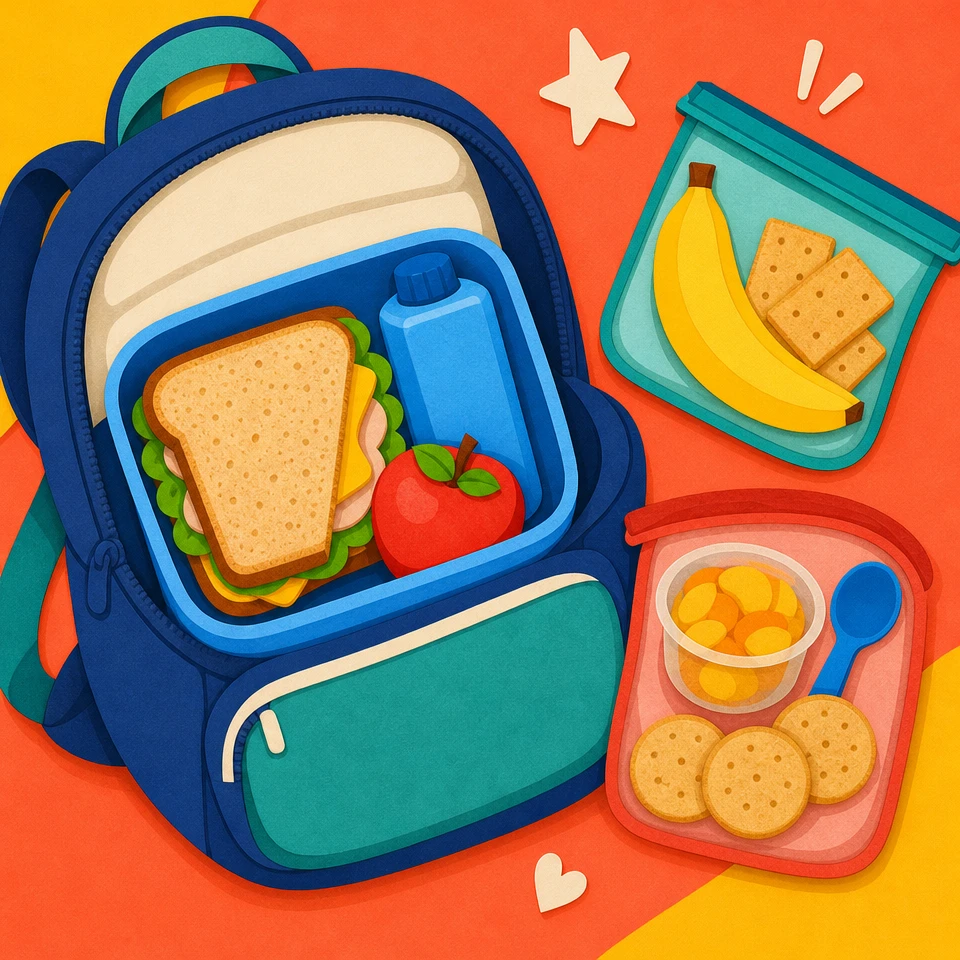
Try a banana and a small pack of plain crackers, if those work for your child and the classroom rules. Put them in a separate bag or container labeled “Classroom snack.” A food your child already knows how to open and eat at school is a useful starting point.
If the school wants snack in a particular basket, pocket or cubby, follow that system rather than making your child unpack lunch to find it.
Lunch: give the cold foods their own space
One familiar option is a turkey-and-cheese sandwich, a whole apple and water. The sandwich needs cold storage. Pack perishable lunches and snacks with at least two cold sources, and use a refrigerator or cooler on arrival when one is available, following FoodSafety.gov's school-lunch guidance.
Keep the sandwich in the insulated lunch bag; put the water wherever it fits securely. For more detail, see our guide to keeping school lunches cold. Don't take away a cold pack to make room for a shelf-stable snack.
Aftercare snack: plan for the later break
For a snack that won't need the refrigerator before opening, one option is crackers plus an unopened fruit cup whose label says it can be stored at room temperature. Pack a spoon if it needs one, and label the pack “Aftercare.” Follow the package's storage instructions; a sealed container alone doesn't tell you whether it needs refrigeration.
If your child prefers yogurt, cheese or another perishable snack, confirm how it will stay cold until that later break. Michigan's school-lunch food-safety guidance cautions that frozen gel packs aren't recommended for all-day storage. Don't assume the lunch setup will cover aftercare too. If suitable cold storage can't be arranged, choose a snack labeled for room-temperature storage instead.
Put each pack where it will be used
Try this arrangement before buying another container:
- Insulated lunch bag: lunch foods that need to stay cold, with the cold sources in place.
- Backpack pocket or separate snack bag: the classroom snack, if its foods don't require refrigeration and the school allows this location.
- Second labeled pouch: the shelf-stable aftercare snack, ready to go to the program's designated storage spot.
If the later snack needs refrigeration, follow the storage arrangement you confirmed with the program instead of this shelf-stable example. A separate insulated snack bag still needs an appropriate cold-storage plan.
Show your child the three packs before they leave. Simple words such as “Snack,” “Lunch” and “Aftercare” may be enough; add an agreed picture or color if that makes the labels easier to recognize.
If it still won't fit
Lay out lunch with its cold sources first. Move only the foods that don't need refrigeration into the separate snack packs, then check the backpack space again.
If the containers are the problem, try a smaller container you already own that still holds the food without crushing it. Keep wrappers or label information available when school rules require them.
Ask staff where the extra snack can go rather than assuming another bag will be allowed. The useful setup is the one that fits both the food and the school's routine.
A quick refill and packing list
Keep the list wherever whoever packs will see it:
- A lunch your child recognizes, plus its storage plan.
- A classroom snack packed the way school requests.
- An aftercare snack with storage arranged for the actual break.
- Frozen cold sources ready for any perishable packs.
- Containers or bags, labels, and any needed spoon or fork.
- A note to replace whichever familiar snack or lunch item ran low.
After school, check what came home and ask whether your child could find and open each pack. If something was missed, change that part of the setup rather than starting the whole system again.
Keep the lunch plan alongside the snack plan
For the lunch part of your family's routine, take a look at Lunch Crew. Keep your school's snack schedule alongside whichever planning method works for your family.
Sources and review notes
Food-storage guidance comes from FoodSafety.gov: Bag lunches for school and work and Michigan Department of Agriculture and Rural Development: School lunches. Check your actual school and aftercare arrangements and follow each food's storage instructions.
These public parent discussions informed the question addressed here; they are not food-safety authorities:
- Lunch and two snacks: packing for a long school day
- A classroom snack that needs to be packed separately
Prepared by Lunch Crew.