Warm lunches
How to Pack a Hot Lunch in a Thermos (and Keep It Warm)
For a hot school lunch, preheat an insulated food jar (a Thermos or similar), add properly heated food, and keep it closed until eating time. Reheat leftovers to 165°F, and keep the packed food at 140°F or above until lunch. Those are two separate checks.
A jar can make last night's pasta useful again. The important part is knowing whether your particular jar, meal, and schedule can keep it hot—not simply whether the outside still feels warm.
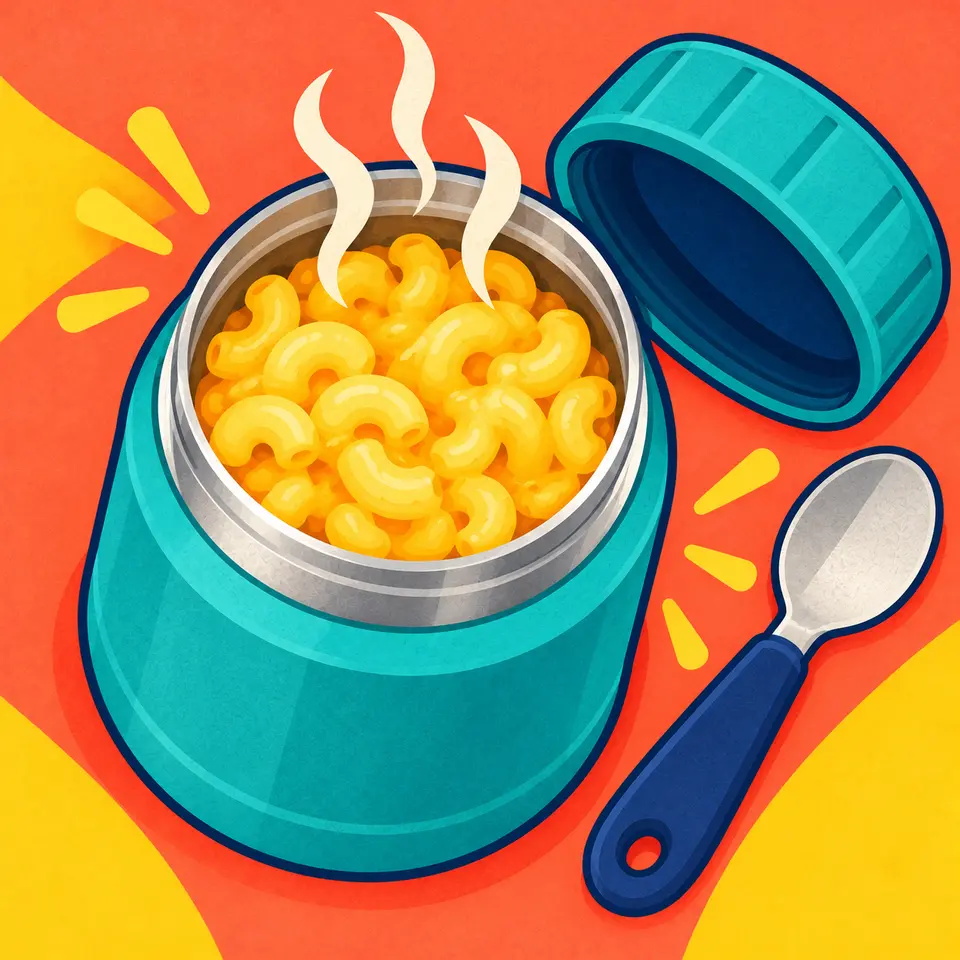
Choose a jar your child can use
Use a container designed for hot food, not an ordinary plastic lunch container inside an insulated bag. Follow the manufacturer's instructions for preheating, filling, and closing it.
Practice opening the empty jar at home and pack a spoon or fork that fits. A leak-resistant lid is helpful only if your child can open it or knows how to ask for help.
Choose a size that suits the meal you intend to pack and follow its fill guidance. Don't overfill it or defeat the seal to squeeze in another spoonful.
Preheat, then fill
USDA recommends filling the insulated container with boiling water, letting it stand for a few minutes, emptying it, and adding the hot food. Check that this method is suitable for your container.
An adult should handle the boiling water and hot filling. While the jar preheats, heat the meal separately. Empty the water carefully, add the food promptly, and close the jar as directed. Keep the lid closed until lunch rather than opening it for a quick look.
Use a thermometer, not just steam
Reheat leftovers to 165°F throughout, checking with a food thermometer. Stir foods when appropriate so you're not measuring a hot edge while the middle is still cool. Bring reheated soups, sauces, and gravies to a rolling boil. Nebraska Extension's leftover guidance
The 140°F hot-holding target is for keeping the food out of an unsafe temperature range before it is eaten. It does not mean the food is comfortable to put straight into a child's mouth. Teach your child to open the jar carefully, ask an adult for help when needed, and let a bite cool before eating.
Don't put merely warm food into the jar and expect the container to heat it up.
Check the time between packing and eating
Ask when your child actually sits down to eat. Packing at 6:30 a.m. for a 12:30 p.m. lunch is different from filling the jar just before a short trip to school.
A useful home check is to follow your normal packing routine with the same food, amount, and jar. Leave it closed for the expected interval, then measure the food temperature. It should still be at least 140°F. Repeat the check if you change the jar, the food or the amount, and again when the weather turns cold. USDA's hot-holding target
If the setup cannot maintain that temperature, use another plan: a chilled lunch with appropriate cold sources, or a school-approved way to refrigerate and reheat the food. Our cold-lunch guide explains the first option.
Choose foods that suit a closed jar
Soup, chili, beans, sauced pasta, oatmeal, or a familiar stew are practical starting points.
Also think about texture. Something your child enjoys crisp may be less appealing after sitting in a closed food jar. Try the packed version at home before making it the only main at school. You don't need to buy a new container just because one food isn't a good fit.
The morning order
- Adult preheats the suitable food jar.
- Reheat the meal and check the required temperature.
- Empty preheating water carefully; fill and seal as directed.
- Add the utensil and napkin.
- Keep the lid closed until eating time.
Discard leftover food that comes home in the jar unless you know it stayed hot. For meals that don't require reheating, browse school lunches without a microwave.
Put the heating job on the plan
Choosing a hot lunch ahead gives you a chance to check the jar, utensils, and leftovers before morning. Lunch Crew keeps the chosen lunch on the plan and the packing list, so a hot lunch isn't a morning surprise.
Sources and review notes
Prepared by Lunch Crew. Source review: October 27, 2026.