Make ahead
Freezer-Friendly School Lunch Foods You Can Make Ahead
Start with one lunch food your child already eats, make a small batch, and see how it tastes after freezing and thawing. That is more useful than filling the freezer with twenty sandwiches nobody has tried.
Sandwiches, muffins, and individual portions of suitable cooked meals can give you a head start. For a cold sandwich, move it from the freezer to the refrigerator the day before you need it, rather than thawing it on the counter. Kansas State's sandwich-freezing guidance
Which sandwich fillings freeze well?
Start with the guidance rather than assuming a whole sandwich will come back exactly as it went in.
Scroll sideways to read the table.
| Better starting points | Better added after thawing, or tested cautiously |
|---|---|
| Cooked chicken, turkey, or roast beef | Lettuce, tomato, onion, and pickles, which lose their texture |
| Canned tuna or salmon | Mayonnaise-based fillings, which can separate |
| Hard or semi-hard cheese, such as cheddar | Hard-cooked eggs, which can become tough |
| Nut butter where allergies and school rules allow it | Jelly directly against bread, which can make it soggy |
These examples are drawn from Kansas State and Nebraska Extension.
A seed-butter sandwich may be worth a small household trial when the actual product fits your needs; don't assume every brand freezes alike. For a permitted nut- or seed-butter-and-jelly sandwich, spread the nut or seed butter on both slices before adding the jelly. That keeps the jelly from touching the bread directly.
Sturdier bread can be easier to handle. Keep wet or crisp toppings separate to add later, if your child is comfortable assembling them at lunch.
Freeze sandwiches so you can use one at a time
Make the sandwiches with clean utensils and suitable, properly stored ingredients. Then:
- Wrap or bag each sandwich individually, removing excess air.
- Label it with the filling and date.
- Lay the wrapped sandwiches flat in the freezer until firm.
- Put the individually wrapped portions inside a freezer-quality outer bag or container.
- Use the oldest dated batch first.
Nebraska Extension recommends one to three months for best sandwich quality. That's for quality; freezing won't make up for food that was mishandled beforehand.
Keep the freezer at 0°F or below. FDA's storage guidance
Other lunch parts to consider
Think in components rather than complete frozen lunchboxes.
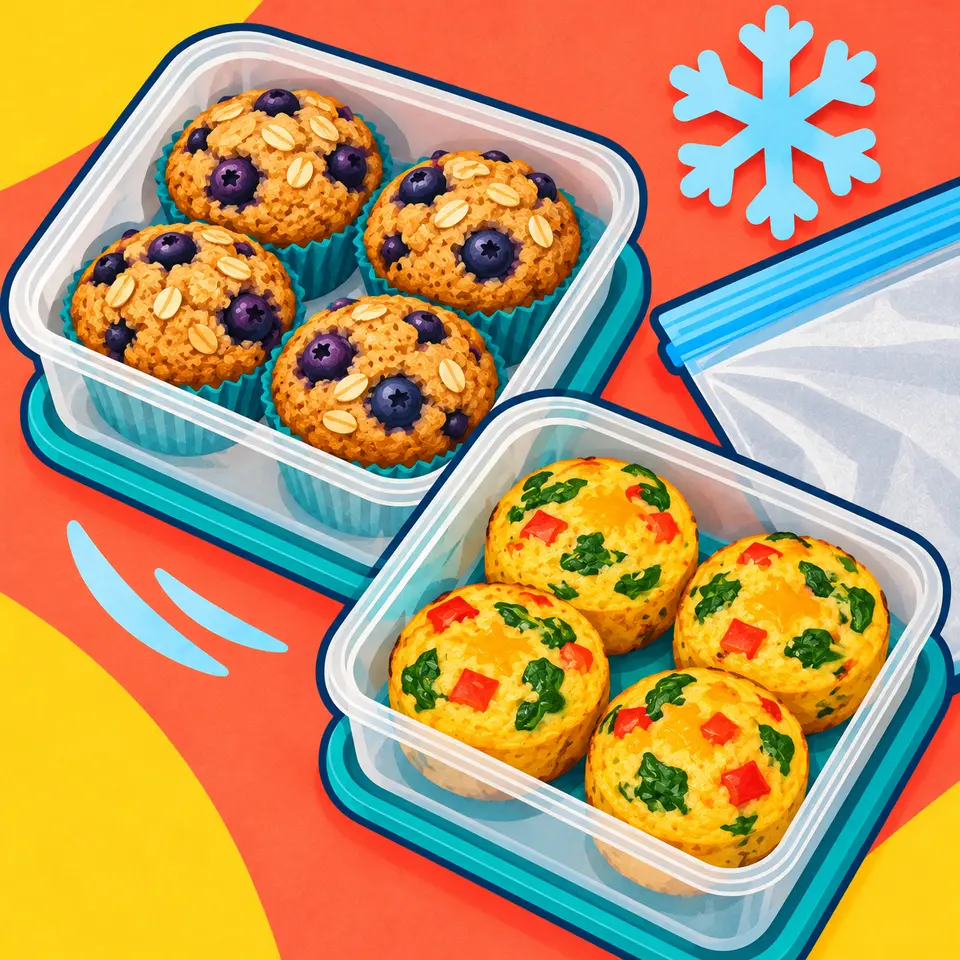
Muffins, pancakes, or waffles: Try a small batch of a recipe your family already uses. Separate portions so you don't have to thaw a whole stack.
Bread, bagels, and tortillas: Freeze useful amounts and follow any package instructions. These can serve as ingredients when you assemble lunch later.
Cooked bean-and-cheese burritos or sauced meals: Freeze single portions and plan to reheat them rather than letting them thaw in a backpack. A recipe with freezing and reheating instructions makes this easier.
Cool cooked leftovers promptly in shallow containers and refrigerate or freeze them within the applicable time limit: two hours, or one hour above 90°F. Don't leave a large pot on the counter waiting for it to become completely cold. FDA handling guidance
Make thawing part of the plan
For a cold lunch, thaw the sandwich in the refrigerator the day before. Pack it from the fridge with appropriate cold sources; our cold-lunch guide covers the bag setup.
For a hot lunch, reheat leftovers to 165°F, then pack them in a preheated food jar that keeps them at 140°F or above until lunch. The hot-lunch guide walks through the steps.
For a store-bought frozen sandwich, follow the package's thawing and handling instructions.
Keep the batch small enough to enjoy
Pick one or two familiar foods, label them, and record what is in the freezer. After trying the thawed version, decide whether to make more. Texture preferences matter just as much as having a full shelf.
Print the freezer inventory to note each batch, the number of portions left, and what needs moving to the fridge.
Put tomorrow's thaw on today's list
Lunch Crew keeps your family's lunch choices together. Once tomorrow's meal is chosen, you can check whether anything needs to move from freezer to fridge. The plan is the reminder; the food still needs the right handling.
Sources and review notes
Prepared by Lunch Crew. Source review: October 27, 2026.