A flexible lunch plan
How to Pack a Balanced School Lunch Without Overthinking It
Start with a familiar main that includes protein, add fruit and vegetables, include a grain or another suitable side, and choose a drink. Think about calcium-rich foods such as milk or yogurt as part of the day's meals, too.
Use it to organize the decision, and plan a varied lunch without turning the lunchbox into a daily math assignment.
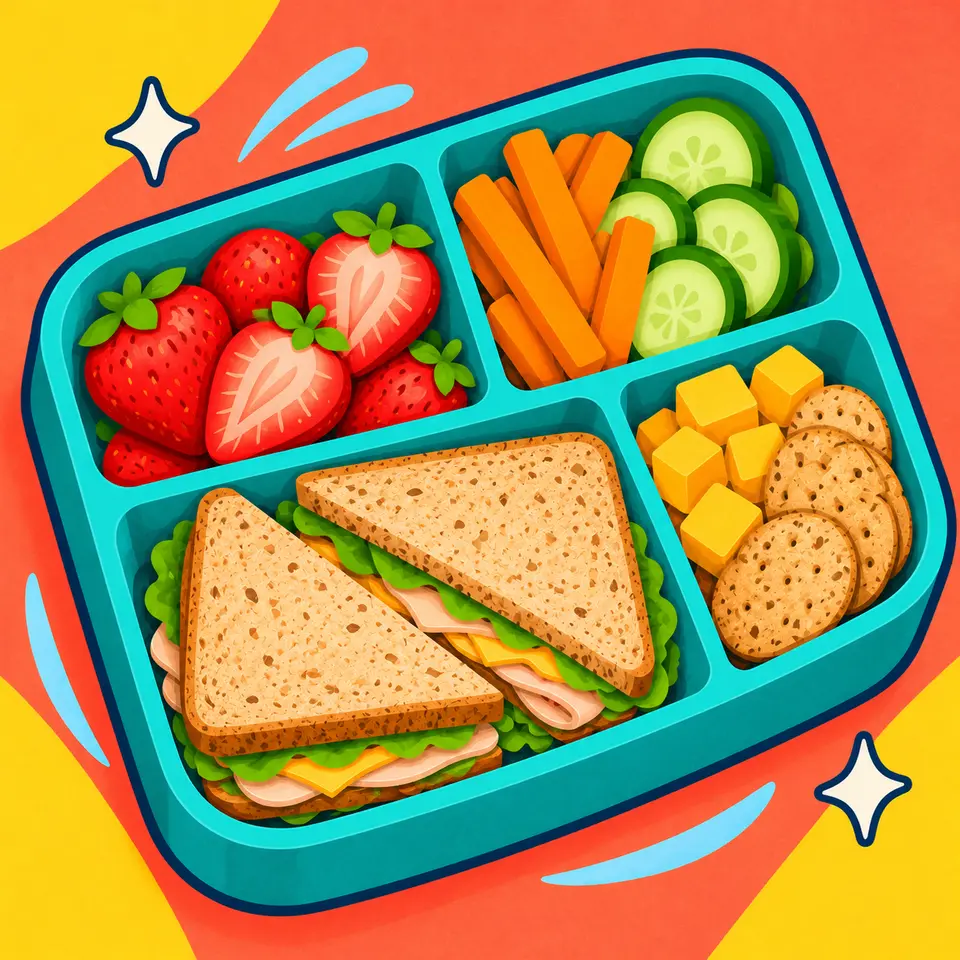
Use five categories as a packing guide
A main, fruit, vegetable, side, and drink give you places to start. They're packing categories, so they won't each do the same nutritional job.
For example, a yogurt main may already contribute protein and calcium. Water is a useful drink, but choosing it doesn't supply the same nutrients as milk. A side can be bread, crackers, or something else that fits the rest of the meal.
You don't need a separate container for every category. A sandwich can contain several parts of the meal, and fruit can sit alongside it.
Build from foods your child recognizes
Scroll sideways to read the table.
| Part of the lunch | Options to consider | What to think about |
|---|---|---|
| Main with protein | Chicken or turkey, eggs, beans, cheese, yogurt, hummus, or a permitted seed butter | Include a food your child is comfortable eating at school. |
| Fruit | Apple slices, berries, clementine segments, melon, or a suitable fruit cup | Choose a preparation and container your child can manage. |
| Vegetable | Cucumber, peppers, cooked carrots, peas, or another familiar vegetable | Texture can matter as much as which vegetable you choose. |
| Grain or other side | Bread, pita, whole-grain crackers, rice, or a small muffin | Look at the whole meal; a sandwich already includes bread. |
| Drink | Water, milk, or an appropriate alternative | Beverages are not nutritionally interchangeable. |
If your family uses a plant-based milk alternative, compare its protein, calcium, and vitamin D rather than assuming it matches dairy milk. FDA's label guide explains those differences. A clinician or dietitian can help when allergies or dietary restrictions limit the choices.
For children under 4, and older children who still need it, chop round, firm foods such as grapes into tiny pieces, no larger than half an inch, and adapt foods like raw carrot sticks and cheese chunks to their chewing skills. AAP choking-prevention guidance
What the nutrition guidance adds
For children ages 5 to 10, the 2025–2030 Dietary Guidelines for Americans focus on whole, nutrient-dense foods such as protein foods, dairy, vegetables, fruits, healthy fats and whole grains, and suggest making cooking a fun, regular part of the household routine. That's a pattern across the day's meals, so one lunch doesn't need to cover everything.
For a lunchbox, a useful starting point is to include a protein food, make room for produce, and consider a whole-grain choice when it fits. Then look at your child's needs across the day rather than trying to make one meal do everything.
The portion your child needs will vary. There's no set sandwich size or amount your child should finish.
Keep the lunch usable
Build around foods your child already eats. A busy school lunch period isn't the best place to rely entirely on unfamiliar foods; Johns Hopkins' school-lunch advice makes the same distinction.
If vegetables keep coming home, ask about the texture, packaging, and time available. Offer a familiar option without turning lunch into a test. Another fruit can fill that spot on busy days; keep offering vegetables at other meals too.
Let your child choose between a few suitable foods. If eating is very restricted, stressful or affecting growth, talk with your child's pediatrician. Nationwide Children's lists these among the signs that a feeding evaluation may help.
A week of mix-and-match examples
Here's one example week. Adjust ingredients, amounts, preparation, and allergy choices for your child.
Scroll sideways to read the table.
| Day | One possible lunch |
|---|---|
| Monday | Turkey-and-cheese roll-ups, whole-grain crackers, apple slices, cooked carrot pieces, and water |
| Tuesday | Hummus with pita, clementine segments, cucumber, and milk or an appropriate alternative |
| Wednesday | Pasta salad with chicken, berries, cooked peas, and water |
| Thursday | Hard-boiled egg, bread or crackers, melon, bell pepper pieces, and water |
| Friday | Bean-and-cheese quesadilla, a suitable fruit cup, prepared cherry tomatoes, and water |
Keep perishables cold using the cold-lunch setup, or follow the hot-lunch method when serving a meal hot. An uneaten lunch also deserves a practical check; see lunchboxes coming home full.
Keep the choices in one place
Lunch Crew uses familiar lunch categories to organize choices and packing. You decide which foods are available, and your children choose their lunches ahead.
Sources and review notes
Prepared by Lunch Crew. Source review: October 27, 2026. General meal-planning information, not an individualized nutrition plan. Examples are editorial suggestions.